Disclosure: This post contains affiliate links. If you purchase through them, I may earn a small commission at no extra cost to you. I only recommend gear I’d use myself or would hand to a neighbor.

Out here in rural Nevada, the grocery store is a long drive away and the growing season is short. That combination either forces you to plan ahead or it teaches you a hard lesson about going hungry in February. We learned early: if you grow it, you need a plan to keep it. Here’s how we handle food production and storage through every season on our place.
Plan Your Garden Around the Calendar — Not Just Summer
Most people plant in spring, harvest in summer, and call it done. That leaves a long, expensive winter ahead. The fix is simple: plan your garden specifically for what you can store, not just what tastes good off the vine in July.
Winter squash, potatoes, sweet potatoes, dried beans, onions, garlic, and root vegetables like carrots and beets are your backbone crops. They store for months without electricity. Plant enough of them and you’ll be eating homegrown food in January without touching a freezer or a canner.
Add a second planting in late summer for cool-weather crops — kale, spinach, turnips, radishes, and winter lettuces. These run right into first frost and give you fresh greens during the shoulder seasons. A cold frame or low tunnel can push that window another 4–6 weeks on either end.
The goal is overlap. When your summer harvest is winding down, your fall crops should be hitting. When your root cellar is getting low in March, your early spring greens should be starting. You’re building a relay race, not a sprint.
Canning: The Backbone of a Homestead Pantry
Nothing beats a shelf of home-canned food for long-term, electricity-free storage. Canned correctly, most vegetables and meats will keep 1–5 years without refrigeration.
There are two methods you need to know:
- Water bath canning — For high-acid foods: tomatoes, pickles, jams, jellies, and fruit. Easy entry point. A large water bath canner and a basic rack is all you need to get started.
- Pressure canning — For low-acid foods: green beans, corn, carrots, meat, and most other vegetables. Non-negotiable for safety. A quality pressure canner is the single most important piece of equipment a homesteader can own. Don’t cut corners here.
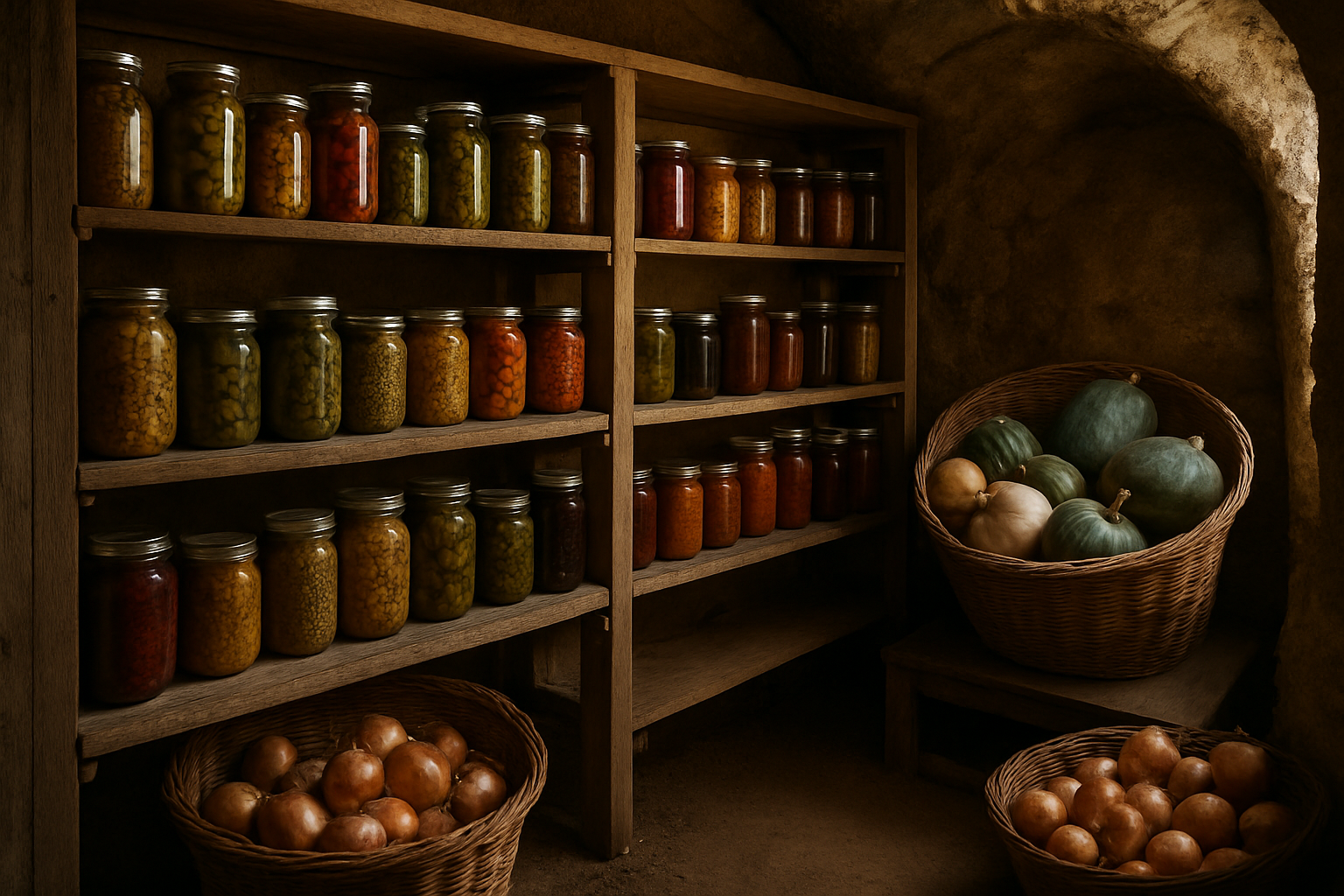
Stock up on wide-mouth mason jars in both quart and pint sizes. Lids are single-use — buy extras and rotate them. Rings are reusable. Store filled jars in a cool, dark location away from temperature swings. A basement or interior closet works fine if you don’t have a dedicated root cellar.

Beyond Canning — Other Storage Methods That Actually Work
Canning is king, but it’s not the whole kingdom. A well-rounded homestead uses multiple preservation methods to diversify risk. If one fails — a cracked jar, a freezer outage — the others carry you through.
Root Cellaring
Potatoes, sweet potatoes, onions, garlic, winter squash, apples, and many root vegetables just need cool, dark, humid conditions to last months. No electricity, no equipment, no processing. A corner of your basement, a buried container in the yard, or a proper dug root cellar all work. We store our potatoes and onions in wooden storage crates in the coolest room of the house and they routinely last through April.
Freezing
Freezing is fast and preserves texture better than most other methods — great for berries, sweet corn, summer squash, and blanched greens. The weakness is electricity dependency. We treat the freezer as a convenience, not a long-term survival plan. A vacuum sealer extends freezer life dramatically and cuts freezer burn. Worth every penny if you’re putting up large quantities.
Dehydrating
Dried food is lightweight, takes minimal storage space, and keeps 1–3 years when stored properly. We dehydrate tomatoes, peppers, herbs, apples, and jerky regularly. A large-capacity food dehydrator with stackable trays speeds the process up considerably. For longer shelf life, seal dried foods in Mylar bags with oxygen absorbers — the same approach used in professional long-term emergency food storage.
Lacto-Fermentation
Sauerkraut, kimchi, fermented pickles, fermented salsa — these are among the oldest preservation methods on earth and they require nothing but salt, vegetables, and time. Fermented foods also provide probiotics that canned and frozen food don’t. A ceramic fermentation crock makes the process easy and reliable. True no-electricity preservation that rewards consistent use.
Building a Storage System That Actually Holds Up
The storage system matters as much as the preservation method. Here’s how we think about it on our place:
- Label everything. Date, contents, method. You will forget. A Sharpie and a piece of masking tape takes five seconds.
- First in, first out. Rotate your stock. New jars go to the back. Oldest items get used first.
- Diversify by method. Never have 100% of your stored food in the freezer. Power outages happen. Spread the risk across multiple methods.
- Track your quantities. Log what you put up each year and how much you actually use. After a few seasons you’ll know exactly how many quarts of green beans your family eats between October and April — and you’ll plant accordingly.
- Build storage space before you need it. A set of heavy-duty pantry shelving units in a cool interior room costs less than one month of grocery bills and lasts decades.
This Week: Take One Step
If you’re not already preserving food, don’t try to overhaul everything at once. Pick one method and start there. If you’ve never canned, pick up a water bath canner and put up a batch of salsa or jam this weekend. If you already can, inventory what’s on your shelves and figure out what ran short this past winter — plant more of that this year.
Self-sufficiency isn’t built in a single season. It’s built one jar, one crate, one labeled bag at a time. Start where you are, use what you have, and add a new skill every season. Three years from now, you’ll have a pantry that actually carries your family through the lean months — and you’ll wonder why you waited.

Leave a Reply