Disclosure: This post contains affiliate links. As an Amazon Associate, Sari Memorial Homestead earns from qualifying purchases — at no extra cost to you. We only point to gear we’d actually use on the place.
If you’ve been thinking about adding dairy goats to your homestead, we’re here to tell you: it’s one of the best decisions we ever made on this place. Fresh goat milk for drinking, cheese, soap, and yogurt has changed the way we think about food self-sufficiency out here in the high desert of Indian Springs. But we’re not going to sugarcoat it — goats require real commitment, solid fencing, and a daily routine you can’t skip. This guide covers everything a beginner needs to know to get started on the right hoof.
Why Dairy Goats Make Sense for the Small Homestead
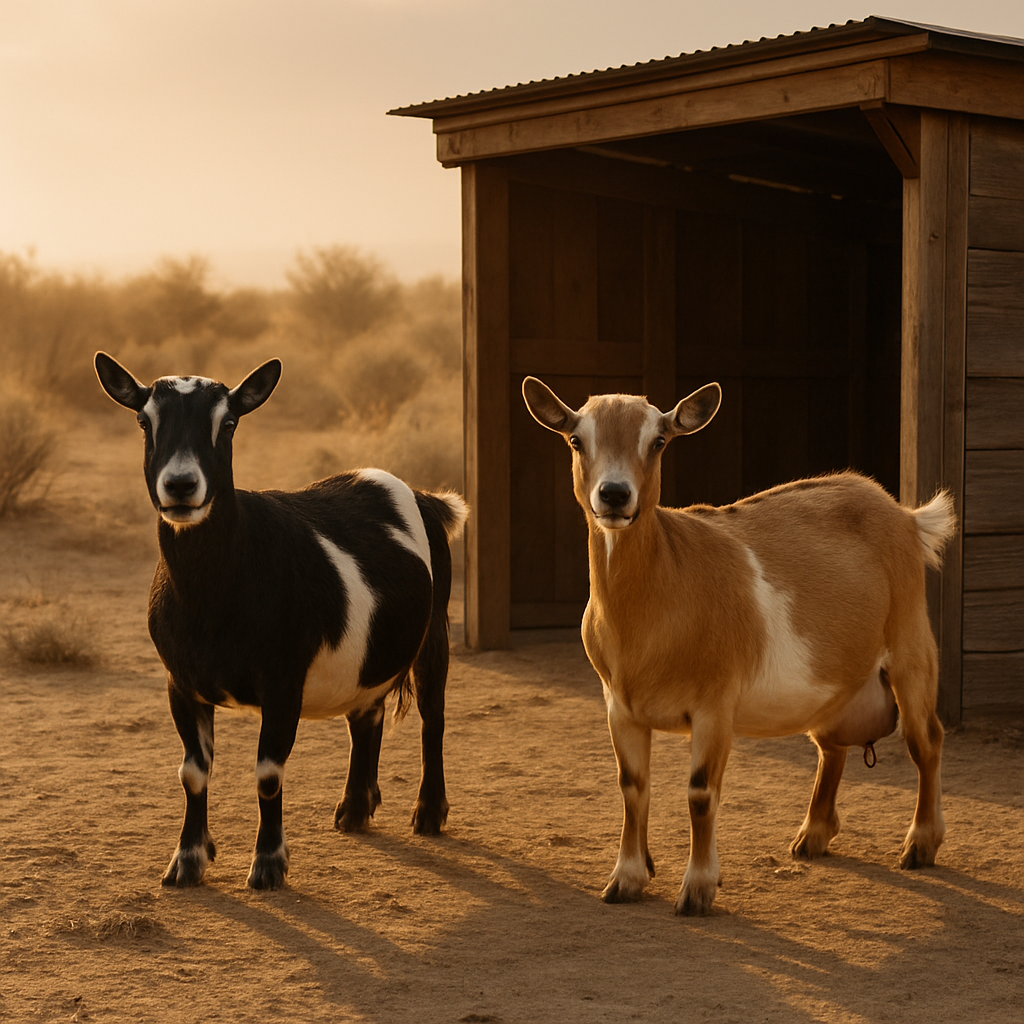
Compared to a dairy cow, a goat is a manageable, cost-effective entry point into home dairying. A good dairy doe will give you anywhere from a half-gallon to over a gallon of milk per day at peak production. That’s more than enough for a family to drink fresh, make cheese, and still have some left over for the animals. Goats eat far less than cattle, they thrive on browse and roughage, and they don’t need nearly as much land. On our acre-and-a-half setup, we comfortably run two does and a wether as a companion — that’s a perfectly workable small herd for a beginner.
Choosing the Right Dairy Breed

Breed selection matters more than most beginners realize. We run Nigerian Dwarf does because they fit our space and produce rich, high-butterfat milk that is outstanding for cheese and soap making. But there are several great options depending on your goals and climate.
- Nigerian Dwarf — Small, hardy, high butterfat (6–10%). Great for small properties. Our personal favorite.
- Nubian — Larger, loud, but known for sweet, high-fat milk and a calm temperament. Popular across the country.
- LaMancha — Quiet, efficient producers with good milk volume. Distinctive tiny ears. Excellent choice for hotter climates.
- Alpine — High-volume producers with lower butterfat. Great if you want raw drinking milk by the quart every day.
- Saanen — The Holstein of the goat world — big producers, calm, gentle. Best if you have more space.
Whatever breed you choose, always buy from a reputable breeder who tests for CAE (Caprine Arthritis Encephalitis), CL (Caseous Lymphadenitis), and Johne’s disease. A clean herd history is non-negotiable if you’re planning to consume the milk.
Setting Up Goat Housing and Fencing
We learned the hard way that a goat determined to get out of a fence will find a way. Your enclosure needs to be taller than you think — at least four feet, and five is better for full-size breeds. We use a combination of cattle panels and welded wire livestock panels secured with T-posts, and it has held up well in the Nevada wind. Goats are also notorious climbers and scratchers, so check your posts regularly.
For shelter, you don’t need anything fancy. A three-sided shed that gets them out of wind, rain, and direct desert sun is sufficient. We bed ours with straw and clean it out on a weekly deep-litter schedule. Make sure the sleeping area stays dry — wet bedding leads to hoof rot faster than almost anything else. We keep a good hoof trimming tool on the wall of the barn and trim every six to eight weeks without fail.
Feeding Your Dairy Does for Maximum Milk Production

Dairy does in milk have serious nutritional demands. The foundation of their diet is high-quality grass hay — we feed orchard grass and timothy — offered free choice. On top of that, milking does get a grain ration at milking time. We use a quality dairy goat pelleted grain feed formulated for lactating does, typically about a pound per doe per day adjusted for milk output. More milk means more grain, but don’t overfeed — obesity in goats shuts down milk production and causes pregnancy complications.
Minerals are critical and often overlooked by beginners. Goats need loose minerals specific to goats — not sheep minerals, because goats require copper that would be toxic to sheep. We keep a loose goat mineral blend with copper in front of them free choice at all times. Baking soda offered free choice also helps them buffer their rumen and avoid bloat. And fresh, clean water — more than you think they need — every single day.
The Breeding and Freshening Cycle

Does only produce milk after they’ve kidded, so understanding the breeding and freshening cycle is essential. Most standard breeds come into heat in the fall (August through January), triggered by shortening day length. Nigerian Dwarfs are a year-round cycling breed, which gives you more scheduling flexibility. Does are bred, gestate for approximately 150 days (five months), kid out, and then enter their lactation cycle.
You’ll want to “dry off” your doe about two months before her next kidding date to give her body a rest. That means gradually reducing milking frequency until her milk production stops. After she kids again, you’re back in business. Keeping a good breeding and health journal is something we can’t recommend enough — a simple livestock record-keeping journal will save you enormous headaches when you’re trying to track due dates and production history across multiple animals.
Milking: Equipment and Technique

This is where the rubber meets the road. Consistency is everything in dairy goat management — your does will produce best when milked at the same time every day, roughly twelve hours apart. We milk once a day after the kids are weaned and the doe’s production has peaked; twice a day in the first weeks of lactation for maximum yield.
Here is the basic milking setup we use on the place:
- A milking stand — Keeps the doe still and elevated for comfortable milking. We built ours, but quality goat milking stands are available online and are worth every penny for beginners.
- Teat dip and pre-dip — A pre-milking iodine teat dip sanitizes the teat before you start. Always use it. Always.
- Strip cup — Strip the first few squirts from each teat into a strip cup to check for abnormalities before milking into your collection vessel.
- Stainless steel milking pail — Plastic holds bacteria. We use a dedicated stainless steel milk pail that gets washed and sanitized after every single use.
- Milk strainer and filters — Always strain your milk immediately after collection through a stainless milk strainer with disposable filter discs to remove any hair or debris.
After straining, get that milk into the refrigerator or an ice bath as fast as possible. Rapid chilling is what gives raw goat milk that clean, neutral flavor people rave about. Milk left to cool slowly is what gives goat milk its “goaty” reputation. Don’t let that happen to your hard work.
Basic Health Care and Disease Prevention
Find a livestock vet in your area before you need one — this is one of the most important steps a beginner can take. Beyond that, a solid preventive health program covers most of what you’ll deal with. We vaccinate our does annually with CDT (Clostridium perfringens types C & D and tetanus). We run fecal egg counts seasonally to monitor for internal parasites and use the FAMACHA scoring method to assess anemia before any deworming decision. Blanket chemical deworming builds resistance fast — targeted deworming based on actual need is the modern standard.
A well-stocked goat first aid kit lives in our barn at all times: electrolytes, Probios probiotic paste, Bo-Se selenium/vitamin E injectable (prescribed), blood stop powder, and a good digital rectal thermometer. Normal goat temp is 101.5–104°F. Know that number. Anything outside that range and you’re calling the vet.
Is Raising Dairy Goats Right for You?

Raising dairy goats is one of the most rewarding things we do on this homestead. There is something deeply satisfying about pouring a glass of fresh cold milk that your animals produced from hay and good care. But we want to be straight with you: goats are a 365-day commitment. They need you on Christmas morning, on the hottest day in July, and the day after a long work trip. If you’re ready for that, they will give you back more than you put in — in milk, in fertilizer, in entertainment, and in that quiet satisfaction that comes from providing for your own family from the land.
Start with two does minimum (goats are herd animals and suffer alone), buy the best animals your budget allows, invest in quality fencing from day one, and learn to milk consistently. The rest is details you’ll figure out as you go — same as every other skill on the homestead.
Have questions about getting started with dairy goats? Drop them in the comments below — we read every one and answer what we can. And if this post helped you, share it with someone else who’s been thinking about taking the goat leap. We’re all in this together.
Leave a Reply