Disclosure: This post contains affiliate links. As an Amazon Associate, Sari Memorial Homestead earns from qualifying purchases — at no extra cost to you. We only point to gear we’d actually use on the place.
The first summer we tried to push anything productive out of our Indian Springs ground, the plants just sat there and sulked. Yellowing squash, stunted tomatoes, grass that looked like it gave up before it started. We did what most folks do — watered more, tossed down a bag of whatever fertilizer was on sale, and hoped for the best. None of it helped. If you want to test ranch soil and actually fix what’s wrong, stop guessing — the desert doesn’t reward guessing. What turned things around was pulling a real soil test, reading the numbers, and fixing the specific deficiencies our ground had. That’s what this post walks through, start to finish, the way we actually do it on the place.
🚨 Nevada families — before your next growing season, your emergency plan matters just as much as your soil plan. Get our free Nevada Family Emergency Plan — built by a USAF forecaster. Subscribe here → smhomestead.com
Why Nevada Desert Soil Needs a Different Approach
High-desert soil in southern Nevada is alkaline by default — we consistently sit between pH 7.8 and 8.5 out here, sometimes higher. That alone locks out nutrients physically present in the ground. Iron, manganese, zinc — your plants can’t access them when pH climbs too high, no matter how much you amend. On top of that, our caliche layers (that hardpan crust a foot or two down) block drainage and root penetration. Sodium levels from irrigation water compound everything. If you’re homesteading in the Mojave or the Great Basin, a generic Midwest soil guide isn’t going to cut it. You need to test ranch soil for your specific numbers before you spend a dime on amendments.
Step 1 — Pull a Proper Soil Sample
This part matters more than people think. A bad sample gives you bad data, and bad data sends you chasing the wrong fixes. Here’s how we do it:
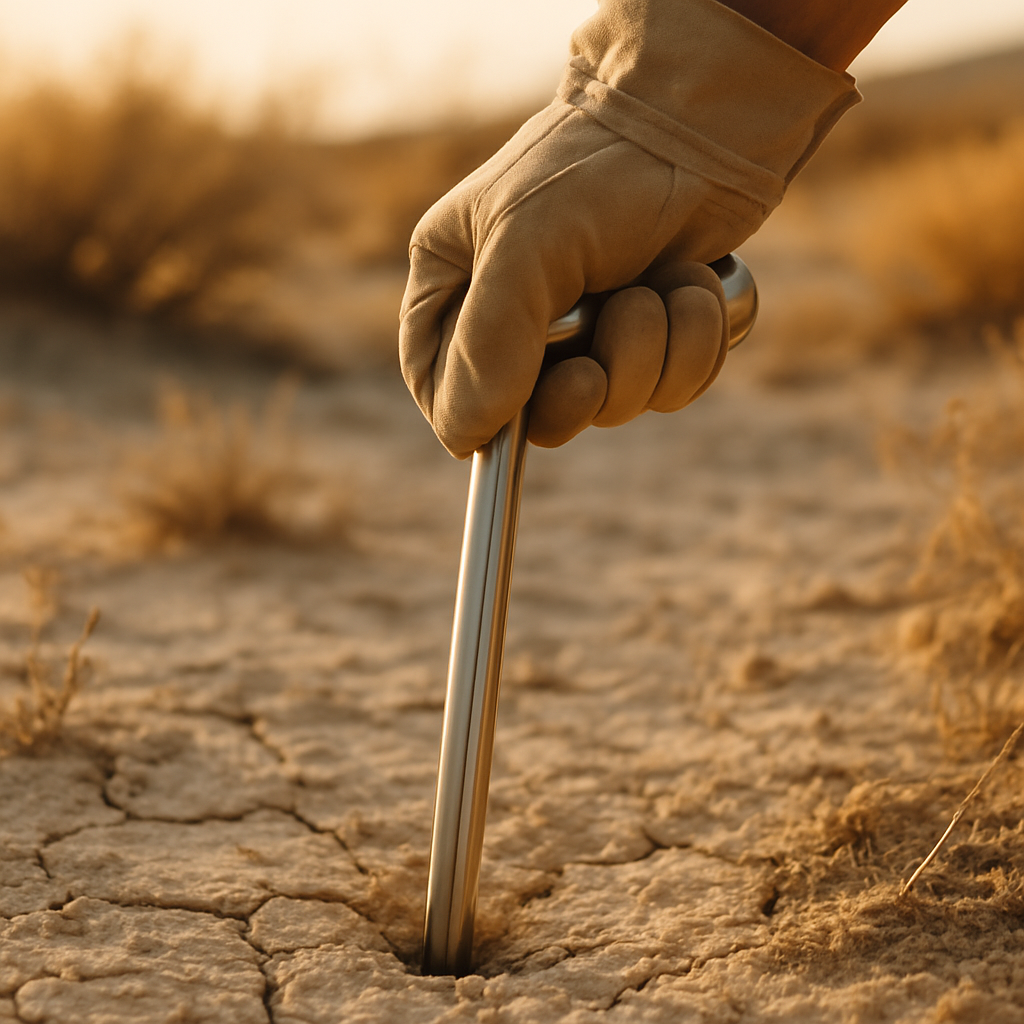
- Use a dedicated soil probe or auger. We use a soil sampling probe to pull clean cores without contamination from surface debris. Beats a shovel every time for consistent depth.
- Sample at two depths — 0 to 6 inches (root zone) and 6 to 12 inches. In Nevada the second layer often tells a completely different story, especially if caliche is lurking.
- Pull 10–15 cores per zone and mix them into a single composite sample. If you have different areas — a vegetable garden, a pasture section, a food forest — sample them separately. We keep a dedicated soil sample collection bag in the barn for each zone.
- Let the sample air dry before shipping or testing. Wet samples can throw off results badly.
Step 2 — Choose Your Soil Testing Method

You’ve got two real options: a mail-in lab test or an at-home test kit. We use both depending on the situation.
Mail-in lab tests are the gold standard. The University of Nevada Cooperative Extension offers testing, and several private labs handle western soils well. A full panel — pH, macronutrients, micronutrients, organic matter, and sodium — typically runs $25–$60 and gives you numbers you can actually act on. Worth every penny at the start of a season or when something is seriously wrong.
At-home test kits are fast and good enough for a mid-season check. We keep a soil test kit for pH and NPK on the shelf for quick reads. This is the exact kit we grab when a bed starts looking off and we don’t want to wait three weeks for lab results. A digital soil pH meter is even faster for pH alone — we check ours weekly during the growing season because irrigation water creeps that number up constantly.
Step 3 — How to Read Soil Test Results Without the Jargon

Lab reports look intimidating the first time. Here’s the short version of what we watch for on the place:
- pH: For most vegetables and forage, you want 6.0–7.0. Above 7.5 (extremely common in Nevada), nutrient lockout is your primary problem.
- Nitrogen (N): Depletes fast, especially in sandy desert soils. Low N shows up as yellowing older leaves.
- Phosphorus (P): High-pH soils bind phosphorus aggressively. Even if it’s in the soil, your plants may not access it.
- Potassium (K): Usually less of an issue in Nevada, but worth checking — don’t assume.
- Sodium (Na): Our irrigation water carries sodium. High sodium destroys soil structure. If your report flags this, take it seriously.
- Organic matter %: Desert soils are chronically low — 0.5% or less is common. Anything under 2% means you’re fighting an uphill battle for water retention and microbial life.
Step 4 — Fix the Soil pH First, Everything Else Second
We learned this the hard way. Adding nitrogen to alkaline soil is like pouring money into a locked box — the plants can’t grab it. Lower the pH first and the nutrients you already have become available.
Elemental sulfur is the workhorse amendment for alkaline western soils. It’s slow — takes weeks to months for soil bacteria to convert it — so apply in fall for spring benefit. We spread elemental sulfur pellets with a hand broadcast spreader and work it in. Follow your lab’s rate recommendation; more is not better with sulfur.
Acidifying fertilizers like ammonium sulfate give you a nitrogen hit and a modest pH nudge at the same time. Good for in-season adjustments when you need both.
Gypsum (calcium sulfate) is our go-to for sodium issues. It doesn’t lower pH, but it displaces sodium ions and flushes them out with irrigation. We’ve seen soil structure improve dramatically over a single season with consistent gypsum applications and deep watering.
Step 5 — Build Organic Matter Relentlessly

No shortcut here and no single-season fix. Organic matter is the long game, but it’s the game that makes everything else work. On the place we run a three-track approach:
- Compost: We run hot compost bins using chicken manure, kitchen scraps, and cardboard. A quality compost thermometer keeps us honest about whether the pile is actually cooking. Target 130–160°F to kill weed seeds and pathogens.
- Cover crops: Winter rye and hairy vetch in the off-season. We till them in or chop-and-drop before they set seed. Even one season of cover crops noticeably improves soil tilth out here.
- Wood chip mulch: Heavy surface mulching (4–6 inches) does double duty — conserves our precious desert moisture AND feeds soil fungi as it breaks down. We spread it with a heavy-duty garden fork — it’s the most-used tool on the place next to a shovel.
Step 6 — Address Specific Nutrient Deficiencies
Once pH is trending the right direction, go after the specific deficiencies your soil test flagged.
- Iron deficiency (yellowing between leaf veins on new growth): Extremely common in alkaline soils. Chelated iron is the most bioavailable form at high pH. We foliar-spray with a chelated iron liquid fertilizer for fast results while longer-term soil work catches up.
- Low phosphorus: Bone meal worked into the planting hole at transplant time. For established beds, a liquid fish and seaweed blend helps move phosphorus into the root zone.
- Low nitrogen: Blood meal for a fast hit, feather meal for slow release. We layer both into planting beds each spring.
- Micronutrient gaps: A quality organic trace mineral fertilizer covers zinc, manganese, and boron — especially useful the first few seasons while your compost program builds up.
Keep Soil Records Year Over Year

The single biggest mistake homesteaders make with soil is treating each season as a fresh start. Soil is a multi-year project. We log every test date, every amendment applied, and every rate in our Ranch and Livestock Records system from our Etsy shop — it keeps years of data in one place so we can see whether pH is trending down, whether organic matter is climbing, and what amendments correlated with our best harvests. Patterns only show up over time, and you can’t spot patterns without tracking.
We also pull a lab test every other year minimum, even when things look good. Soils shift, irrigation water chemistry changes, and a $40 test is cheap insurance against a lost growing season.
Quick Soil Troubleshooting Reference

| Symptom | Likely Cause | First Fix |
|---|---|---|
| Yellow older leaves, stunted growth | Low nitrogen | Blood meal, ammonium sulfate |
| Yellow new leaves, green veins | Iron/manganese lockout (high pH) | Lower pH + chelated iron spray |
| Poor root development, dark leaves | Low phosphorus | Bone meal, liquid fish fertilizer |
| Crusty white soil surface, water beading | High sodium, poor structure | Gypsum + deep flush irrigation |
| Water pooling, slow drainage | Caliche layer or compaction | Deep aeration, organic matter |
Make Your Desert Soil Work for You
Healthy soil is the whole game on a homestead. Every dollar we’ve put into soil testing and targeted amendments has come back multiplied — in yield, in reduced water bills, and in plants that actually defend themselves against pests and 115°F summer heat. Pull the test, read the numbers honestly, fix the pH before anything else, and build organic matter every single season. The desert can grow food — it just needs you to work with its chemistry instead of against it.
🚨 One more thing before you go: your soil plan and your emergency plan should be built at the same time. Get our free Nevada Family Emergency Plan — built by a USAF forecaster. Subscribe here → smhomestead.com
Leave a Reply