Disclosure: This post contains affiliate links. As an Amazon Associate, Sari Memorial Homestead earns from qualifying purchases — at no extra cost to you. We only point to gear we’d actually use on the place.
The first summer we ran our animals on a single pasture from May through October, we watched the land go from scrubby but hopeful to something that looked like a forgotten parking lot. Bare dirt, compacted soil, animals that were technically fed but never really thriving. That was our wake-up call — and rotational grazing has done more for this piece of high-desert Nevada ground than anything else we’ve tried.
This isn’t a university extension pamphlet. This is how we actually handle rotational grazing on the place near Indian Springs, what gear we lean on every week, and what we wish someone had told us before we hammered in that first t-post.
What Rotational Grazing Actually Means (And What It Doesn’t)
Strip it down to the studs: rotational grazing means you divide your pasture into smaller paddocks, move animals through them on a schedule, and give each paddock enough rest time to recover before the animals come back. That’s it. The complexity people pile on top of that core idea is mostly optional.
What it does not mean is a rigid calendar. The land tells you when to move. If the grass in a paddock is grazed down to three or four inches, you move. If the next paddock hasn’t bounced back yet, you wait — or you supplement with hay. The animals and the soil are running the clock, not the date on your phone.
Out here on the Mojave fringe, we work with a lot less forage than someone in Kentucky would recognize. Our pasture recovery periods are longer — sometimes six to ten weeks in summer — and we keep a close eye on soil moisture after any rain event. The principle still holds; we just have to be patient with the land.
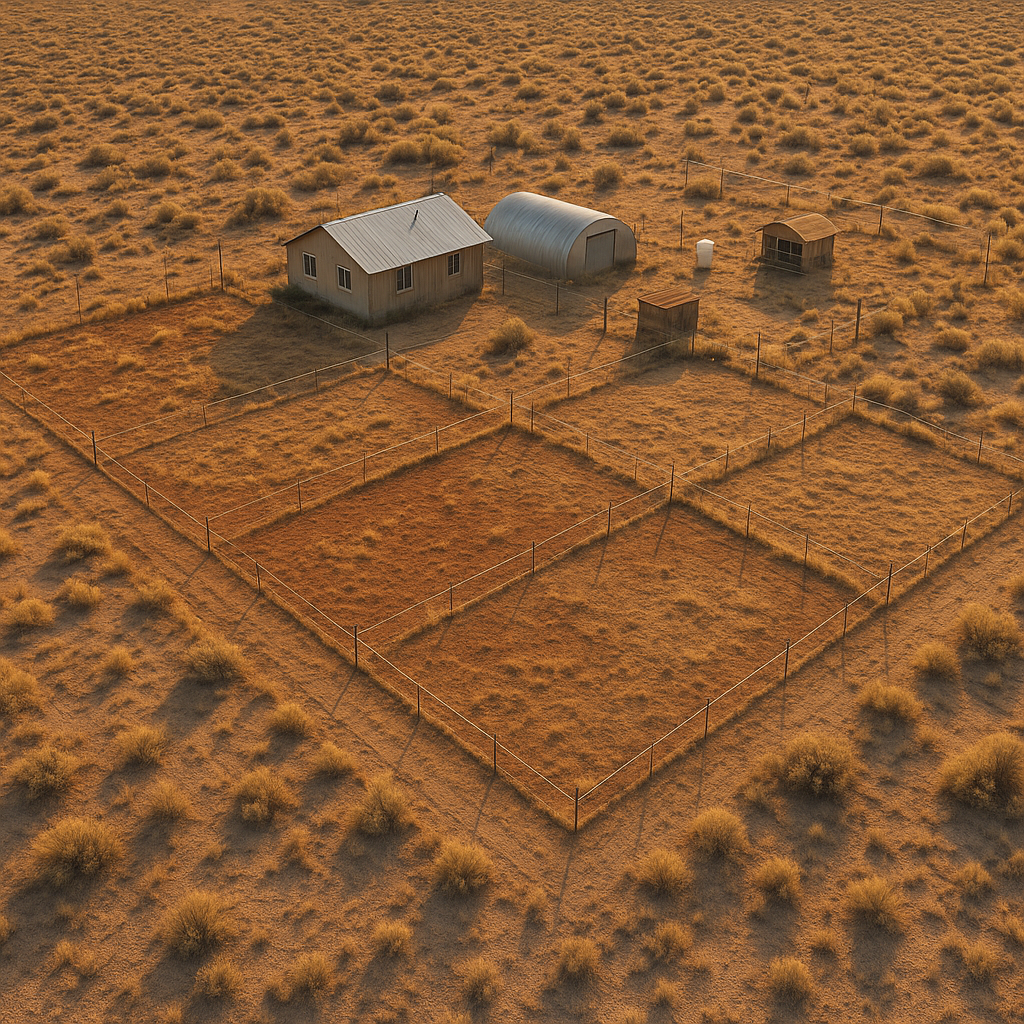
Planning Your Rotational Grazing Paddock Layout

Before you touch a single fence post, sketch out your whole property. Figure out your water sources first — animals need water in every paddock, or you’ll spend your days running hoses and cursing. We use a combination of permanent water lines at fixed points and portable livestock water tanks that we drag to wherever the herd is sitting that week. In the Nevada heat, reliable water access is non-negotiable.
The number of paddocks you need depends on your stocking rate and your forage recovery time. A rule of thumb we’ve found reliable: if your recovery period is 45 days and you want animals in each paddock for 3–5 days, you need at least 9–15 paddocks. We started with 6 and added more as we learned our land’s rhythm. Starting simple beats paralysis every time.
For fencing, we’ve gone almost entirely to electric fence polywire for our interior cross-fences. It’s fast to move, cheap to put up, and the animals respect it once they’ve had one good introduction. We run it off a quality solar electric fence energizer so we’re not running extension cords across the property. A good energizer is the last place to cut corners — a weak one teaches your animals that the fence is a suggestion, and that lesson is hard to undo.
We use fiberglass step-in fence posts for temporary paddock lines. They go in fast, come out fast, and they don’t rust or rot in the desert heat. A decent electric fence tester is also worth grabbing — it tells you immediately if a section has shorted out on a weed or a fallen post, saving you the hunt when animals start wandering.
Reading the Pasture: When to Move, When to Wait

This is the skill that separates a rotational grazier from someone just moving animals around hoping something good happens. You’re watching two things: forage height and animal behavior.
Forage height is your hard stop. Most grasses should not be grazed below three to four inches — below that, you’re hitting the plant’s energy reserves and slowing recovery dramatically. We use a simple grazing stick to take consistent measurements across a paddock before and after grazing. It sounds fussy until you realize it takes about four minutes and saves you weeks of recovery time.
Animal behavior tells you even more. When animals start walking the fence line looking into the next paddock, or when they’re grazing less and resting more in odd places, they’re telling you the salad bar is running low. Happy animals in good forage graze steadily, spread out across the paddock, and spend predictable hours at rest. Learn what “right” looks like for your herd and the deviations become obvious fast.
We log all of this in our Ranch and Livestock Records binder from our Etsy shop — paddock entries, move dates, recovery observations, forage notes. Having that written record across seasons has been the single biggest thing that leveled up our pasture management. You simply can’t keep three years of paddock history reliably in your head.
What Rotational Grazing Does to Your Soil
People get into rotational grazing for the animals and stay for the soil. We sure did.
Properly managed hoof action breaks soil crust — a massive problem out here in the desert — and presses organic matter and seed into the ground. The manure distribution is more even across paddocks rather than piled up around a single water point or loafing area. Rest periods allow root systems to deepen. Deeper roots mean more drought tolerance, more carbon sequestration, and soil that actually holds moisture when the rare rain does come.
We started doing informal soil tests with a basic soil pH and moisture meter before and after our first full rotation cycle. The difference in moisture retention after just one season was noticeable. After three seasons, the oldest paddocks had visible organic matter building at the surface — something we genuinely didn’t think was possible in caliche-heavy Nevada soil.
If you want to go deeper, send samples to your state extension lab or use a home soil test kit to track nitrogen, phosphorus, and potassium over time. Trending those numbers across years is where the real education happens.
Feed, Water, and Mineral Management During Rotation

Rotational grazing reduces your feed bill — we’ve seen roughly a 20–25% drop in hay use since we started — but it doesn’t eliminate supplemental feeding, especially in dry years or during winter when forage quality drops. The key is that you’re now feeding strategically rather than constantly.
We keep a portable hay feeder that moves with the animals so we’re not locking any one paddock into a permanent feeding spot. Hay waste is a real cost, and a covered feeder that keeps hay off the ground pays for itself within a season.
Minerals we handle with a covered mineral feeder on a portable base. Same concept — it travels with the herd, keeps the mineral dry, and means every paddock gets equal access rather than just the paddock closest to the barn.
Common Rotational Grazing Mistakes We Made (So You Don’t Have To)

Moving too slow: We were nervous about overworking paddocks, so we moved animals every 7–10 days in the beginning. Too long. Animals pick out the best plants and re-graze the regrowth before you move them, which hammers the strongest plants and favors weeds. Short, intense grazing periods followed by long rest is the model.
Not enough paddocks: Starting with four paddocks on a property that needed twelve just meant we were rotating too fast and not giving adequate rest. Polywire is cheap. Add paddocks.
Ignoring body condition: Rotation is not a replacement for watching your animals. We weigh and score body condition on our livestock every two to three weeks using a standard BCS chart. If scores drop, we slow the rotation, add hay, or both. A livestock weight tape is a five-dollar tool that removes a lot of guesswork.
Getting Started With Rotational Grazing on a Budget

You do not need a perfect setup to start. Our first rotational system was two paddocks split by a single line of polywire on step-in posts connected to a borrowed energizer. It was rough. It still worked. The land started recovering, the animals started filling out, and we learned enough in that first season to build something better for year two.
If we were starting from zero today, here’s the minimum gear list: a solid solar energizer, a spool or two of quality polywire, a bag of step-in posts, and a portable water tank. Everything else is refinement. The most important investment is observation — walk your paddocks, watch your animals, and write down what you see.
Give this a season. The land will show you what it needs, and you’ll wonder how you ever managed any other way.
Ready to get serious about tracking your herd and pasture performance? Drop your email below to get our homestead newsletter — we share what’s working (and what isn’t) on the place every week, straight from Indian Springs, Nevada. And if you have questions about setting up your first rotational system, leave them in the comments. We read every one.
Want the actual system? Get the AI Morning Briefing Agent → https://sarimemorial.gumroad.com/l/enhkca
Leave a Reply