Disclosure: This post contains affiliate links. As an Amazon Associate, Sari Memorial Homestead earns from qualifying purchases — at no extra cost to you. We only point to gear we’d actually use on the place.
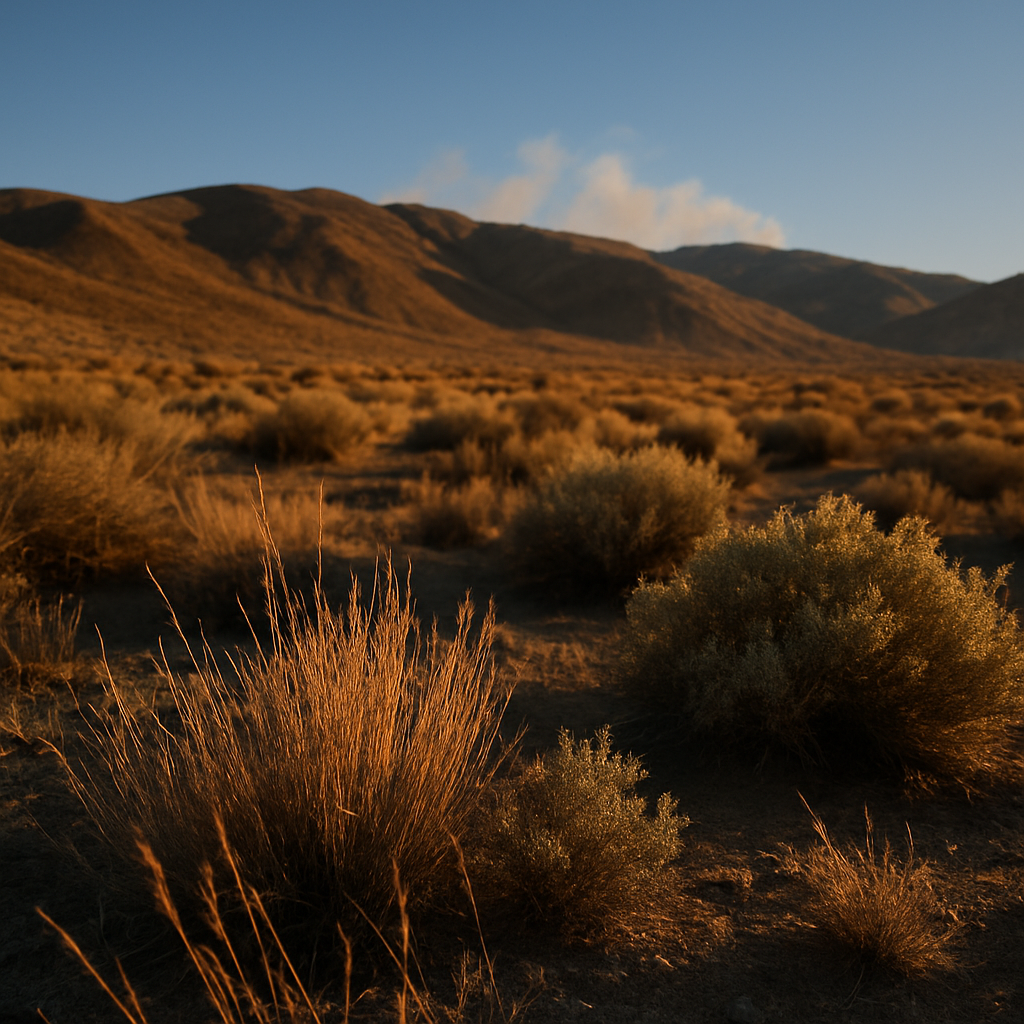
Living out here on the high desert of Indian Springs, Nevada, wildfire isn’t a hypothetical — it’s a season. The creosote and cheatgrass that carpet our property can go from green to tinder in a matter of weeks, and the winds that funnel through the Spring Mountains don’t ask permission before they kick up a spark. Learning to read early warning signs of a wildfire is what separates a close call from a catastrophe, and after years in fire country, these signals are as automatic to me as checking the water troughs every morning.
These five wildfire warning signs are what we actually watch for — not pulled from a textbook, but earned from seasons of living where fire is a real neighbor. Learn them, and you buy yourself precious minutes that matter.
1. The Smell of Smoke — Your First Early Warning Sign of a Wildfire
Your nose is your first and fastest wildfire detector. Wood smoke — especially the sharp, resinous bite of burning brush or juniper — carries miles downwind before any visible haze reaches you. Out here in the Mojave, we can smell a range fire long before a single column of smoke is visible above the ridgeline.
Don’t dismiss that smell as a neighbor’s burn pile. Step outside, face into the wind, and check the horizon in the upwind direction. If the smell intensifies over five to ten minutes rather than drifting off, treat it seriously. We keep a weather-resistant outdoor smoke detector mounted on the barn for nights when we’re not outside to catch it ourselves. Inside the house, a quality battery-backup smoke and CO alarm runs around the clock — power goes out fast in fire conditions, so battery backup isn’t optional.
2. Unusual Animal Behavior Before a Wildfire

Animals know. Every single time we’ve had smoke anywhere near the place, the chickens crowd into the coop hours before we could see why, and the dogs pace the fence line facing the same direction. Wild birds flush in large numbers and move fast — not the lazy circling of hawks riding thermals, but a directed, hurried evacuation. Deer and jackrabbits will cross open ground in broad daylight, which they almost never do otherwise.
If your livestock are bunching at the far end of the pasture and won’t settle, don’t assume it’s just a coyote. Check the sky, check the wind, and check the scanner. We run a NOAA weather alert radio in the barn 24/7 — it has saved us from surprises more than once. Pair that with a set of long-range two-way radios so anyone working a distant pasture can relay what they’re seeing immediately.
3. A Sudden, Unexplained Wind Shift

Wildfire creates its own weather. As a fire grows, it heats the air above it dramatically, sucking surrounding air inward and upward. That pull can reverse the prevailing wind direction in your area even when you can’t yet see or smell the fire directly. One minute the breeze is coming steady out of the southwest; suddenly it dies, swirls, and begins pulling from the northeast.
This is one of the most dangerous early warning signs of a wildfire because it can mean the fire is larger than you thought and close enough to influence local atmospheric pressure. We keep a home weather station with anemometer mounted on a post near the garden — the wind direction arrow is something we glance at constantly during dry spells. If that arrow starts spinning unpredictably during a red-flag day, we stage our 72-hour go bags by the door and start the vehicle.
4. Ash Fall and Floating Embers
Ash drifting down from a clear blue sky is one of the eeriest things you’ll ever see on a homestead — and one of the clearest signs that a significant wildfire is burning upwind. Fine gray ash that settles on your truck hood or water troughs can travel 10 to 20 miles from the fire front in the right wind conditions.
Even more dangerous are live embers — called firebrands — which can be carried a mile or more ahead of the fire itself and land on dry grass, a wood deck, or a hay barn roof. If you see ash falling, assume embers may follow. This is the moment to soak down combustible structures with your garden hoses and move vehicles away from outbuildings. We keep a heavy-duty fire-resistant garden hose coiled at every corner of the barn specifically for this scenario. A 10-pound ABC fire extinguisher mounted inside each outbuilding door is non-negotiable on this place.
5. The Sky Turns the Wrong Color

Nevada sunsets are famously vivid, so we have a trained eye for what’s normal. A wildfire smoke column changes the character of the light in a way that’s hard to describe but impossible to miss once you’ve seen it. The sky takes on a deep orange, brown, or red-bronze cast during daylight hours. Shadows get soft and diffuse. The sun itself may appear as a pale orange disk with no glare — you can stare right at it. The contrast drops out of the landscape the way it does before a dust storm, but the color is warmer, smokier.
At night, a fire over the horizon shows up as an orange glow on the underside of clouds or smoke — similar to light pollution from a city, but pulsing or flickering. If you see that on a ridge where there is no city, fire is burning. Grab a pair of compact outdoor binoculars and scan the ridgeline — you’ll confirm what your gut already knows. This is when you stop watching and start moving through your emergency plan.
What to Do the Moment You Spot Wildfire Warning Signs

Seeing one of these warning signs is not cause for panic — it’s cause for action. Here’s the exact sequence we run through on this place the moment something triggers our radar:
- Confirm the threat. Check the NOAA radio, scan local emergency alerts on your phone, and look at the horizon from multiple vantage points on the property.
- Account for everyone. Get all family members and anyone working the land back to the main house or a predetermined rally point.
- Account for animals. Decide now — before smoke hits — whether you’re sheltering livestock in place, releasing them, or loading them. That decision takes time you won’t have later. Keep lead ropes and halters staged at the gate, not buried in a tack room.
- Grab your go bags and documents. Irreplaceable documents, medications, and the emergency binder go in the truck first.
- Wet down structures if time allows, then get out. No structure is worth your life.
- Communicate. Tell a neighbor or family member off-property where you’re going and what route you’re taking.
We keep a solar hand-crank emergency radio in the go bag so we can receive alerts even if cell towers are overloaded or power is out — which they almost always are in a major fire event. A quality N95 respirator rated for wildfire smoke for each family member is worth every penny when visibility drops to nothing and you’re loading animals into a trailer through thick smoke. Practice pulling out and running your evacuation route at least once a year. Muscle memory matters when the smoke is in your eyes.
Year-Round Wildfire Preparedness Beats Last-Minute Scrambling

The single biggest lesson from watching fire seasons roll through the Great Basin is this: the families who come through it with their animals, their documents, and their composure intact are the ones who already had a plan. Not a perfect plan — just a written, practiced, agreed-upon plan that everyone on the property knows cold.
Start with a defensible space around your structures — clear dry brush back at least 30 feet, relocate woodpiles away from walls, and keep your roof and gutters free of dead material. Then build your emergency kit, write your plan, and walk it with your family before fire season arrives. Out here in Nevada, that means having everything dialed in by late April at the latest.
If you’re putting together a wildfire emergency kit from scratch, here’s the core gear we keep staged by the back door all season: a packed 72-hour go bag, a hand-crank radio, N95 masks, a battery-backup smoke alarm, and a full set of charged two-way radios. Everything lives in the same spot, every season, no exceptions.
If you found this post useful, share it with someone else living in fire country — and drop your own early-warning observations in the comments below. Every region has its own tells, and I’d love to hear what you watch for on your place.
Leave a Reply