Disclosure: This post contains affiliate links. As an Amazon Associate, Sari Memorial Homestead earns from qualifying purchases — at no extra cost to you. We only point to gear we’d actually use on the place.
When the thermometer hits 115°F before noon and the ground radiates heat like a cast-iron skillet, you find out real fast whether your extreme heat preps are good enough. Indian Springs, Nevada doesn’t ease you into summer — one week you’re still reaching for a jacket at dawn, and the next you’re in survival mode. We’ve learned, sometimes the hard way, that you don’t react to extreme heat on a homestead. You prepare for it weeks in advance, or you lose animals, blow your water system, and put your family at serious risk. Here’s exactly how we handle it on this high-desert place.
1. Monitor Heat Across Your Property Before It Becomes a Crisis
The single best thing we’ve done for extreme heat preps is installing a reliable wireless thermometer network across the property. We run a wireless multi-sensor thermometer station with sensors in the barn, the chicken coop, inside the house, and out at the shade structure by the water tanks. Knowing the temperature differential between zones tells us exactly where animals are most stressed at any given hour.
We also watch humidity — even in the Mojave, monsoon season cranks the heat index to dangerous levels fast. A digital hygrometer-thermometer combo in the barn costs almost nothing and has probably saved us several livestock headaches. When the temperature-humidity index climbs into the danger zone for cattle or goats, we know to act immediately — not guess.
2. Water Supply: Double What You Think You Need

Animals in extreme heat need two to three times their normal water intake. We’re not guessing at that figure — we’ve watched it happen firsthand. A goat that drinks half a gallon a day in April can need close to two gallons in July. Our water plan for heat season involves:
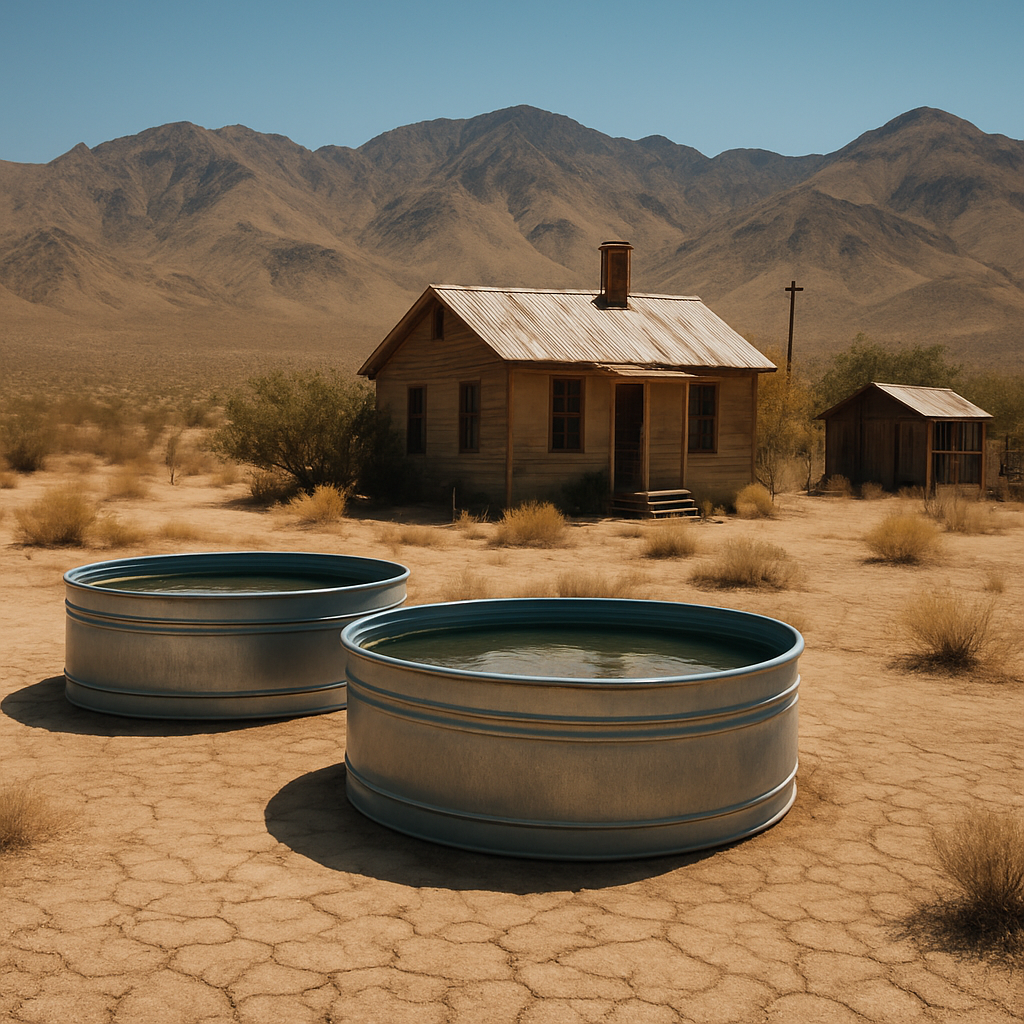
- Extra storage capacity. We added a pair of galvanized steel stock tanks specifically for the hot months. More surface area, more volume, more margin for error.
- Automatic float valves. We retrofitted the main tanks with automatic float valves so water stays topped up without us manually filling three times a day in 110°F heat.
- Shade over tanks. Direct sun heats tank water to near-undrinkable temperatures. We rigged shade cloth over our primary water stations. A roll of 90% UV shade cloth is one of the most versatile purchases we’ve made for summer on the homestead — we use it over tanks, over the coop run, and as a quick shade extension off the barn.
- Poultry-specific water. Chickens are surprisingly heat-fragile. We freeze water in old containers overnight and drop ice blocks into their waterers by mid-morning to keep them drinking through the worst afternoon hours.
For the family, we keep a dedicated large emergency water storage container filled and rotated in the cool room inside. If the well pump fails during a heat event — a real risk when power grids are stressed — we don’t want to be scrambling.
3. Shade Structures: Non-Negotiable for Livestock in Extreme Heat

No animal on this property should be in direct Nevada summer sun without access to shade. Period. We built a simple post-and-beam shade structure over the main loafing area years ago, but every summer we expand or reinforce it. For fast deployment — say a heat wave hits before you’ve finished your permanent structure — a heavy-duty 10×20 canopy staked down solidly gives you covered square footage in an afternoon.
Two design tips from hard experience: Orient shade structures on an east-west axis so the shadow tracks usefully across the day. And make sure the structure is open on the sides — trapped hot air under a solid-walled structure is worse than no structure at all. Good airflow through the shade is what makes the temperature difference that actually matters to an animal standing in it at 3 p.m.
4. Recognize Livestock Heat Stress Before You Lose an Animal
Heat stress looks different across species, and knowing the signs means you intervene before you’re dealing with a downed animal. Here’s what we watch for:
- Goats and sheep: Open-mouth breathing, bunching together in shade, refusing feed, and standing with their backs to the sun are early warnings. Severe panting and weakness mean you’re already behind — get them into a cool, ventilated space and wet them down along the neck and legs.
- Poultry: Wings held out from the body, panting, and pale combs are the tells. We add a poultry electrolyte supplement to their drinkers on the hottest days. It makes a measurable difference in flock survival during extended heat.
- Dogs: Our livestock guardian dogs work in this heat. They always have a shaded resting spot, deep water bowls, and we soak their feet and belly during peak afternoon hours when we’re doing rounds.
We keep a livestock first aid kit stocked and accessible in the barn year-round. In summer we add extras for heat emergencies: electrolyte powder, a spray bottle for misting, and a veterinary digital thermometer for checking core temps when we’re worried about a specific animal.
5. Keeping the Family Safe When the Grid Is Stressed

Nevada power grids don’t always hold up when every AC unit in the valley is running flat out. We treat heat preps for the family with the same seriousness as any other emergency scenario. Our indoor protocol during extreme heat events:
- Designate one “cool room” — the most insulated interior room — as the family gathering space during peak heat hours (noon to 5 p.m.).
- Run heavy thermal blackout curtains on all south- and west-facing windows from June through September. Blocking radiant solar gain through glass is one of the most effective things you can do that costs almost nothing to maintain.
- A portable evaporative swamp cooler is our backup if central AC goes down. In low-humidity conditions (under about 40% RH), evaporative cooling is remarkably effective and draws a fraction of the power a window AC pulls. Perfect for the Mojave.
- We keep a battery-powered fan charged and ready. When it’s 110°F outside and the power is out, moving air across a wet cloth on the back of your neck isn’t a luxury — it’s keeping your core temp manageable.
For our family emergency planning, including heat-specific protocols and go/stay decision trees, we keep everything organized in our Severe Weather Safety Plan from the SMHomestead Etsy shop. It lays out exactly who does what, where everyone goes, and what the triggers are for escalating our response — so in the chaos of a grid-down heat emergency, nobody is standing around trying to remember the plan.
6. Infrastructure Checks Before Extreme Heat Season Hits

Every May, before the real heat arrives, we do a structured walk of the property specifically looking for heat-season vulnerabilities:
- Well pump and pressure tank: Check the pressure switch, inspect the tank bladder, make sure the pump house is ventilated. Pump motors fail in heat. Know your pump specs and keep the model number written down somewhere accessible.
- Hose bibs and water lines: Any exposed PVC in direct sun degrades faster than you’d expect. We wrap exposed lines in UV-resistant pipe insulation to protect them and keep water temperatures manageable.
- Fencing: High heat makes steel T-posts expand and loose wire slack further. Walk the perimeter looking for anywhere an animal might push through during stress-driven fence-testing behavior.
- Generator: We test ours under load every spring. A generator that hasn’t run in eight months may not start reliably when you need it at 6 a.m. during a heat emergency.
7. Treat Heat Season as a Season, Not a Single Event

The biggest mindset shift we made was treating summer as a season-long operational mode rather than reacting to individual hot days. That means the shade is up before we need it, the extra water capacity is online before the animals are stressed, the cool room is prepped before the grid is strained, and the family knows the plan before the emergency hits.
We’re not perfect at it — Nevada summers throw curveballs like 120°F spikes and overnight lows that barely dip below 95°F. But the years we’ve been most ahead of the heat are the years we’ve lost the fewest animals and had the least family misery. That’s the return on investment that keeps us doing the work every May without complaint.
If this resonated with you, drop your own extreme heat preps in the comments below — we genuinely read every one. And if you’re building out your homestead emergency protocols, check out the SMHomestead Etsy shop for planning resources built specifically for rural and off-grid properties. Stay cool out there.
Want the actual system? Get the AI Morning Briefing Agent → https://sarimemorial.gumroad.com/l/enhkca
Leave a Reply