Disclosure: This post contains affiliate links. As an Amazon Associate, Sari Memorial Homestead earns from qualifying purchases — at no extra cost to you. We only point to gear we’d actually use on the place.
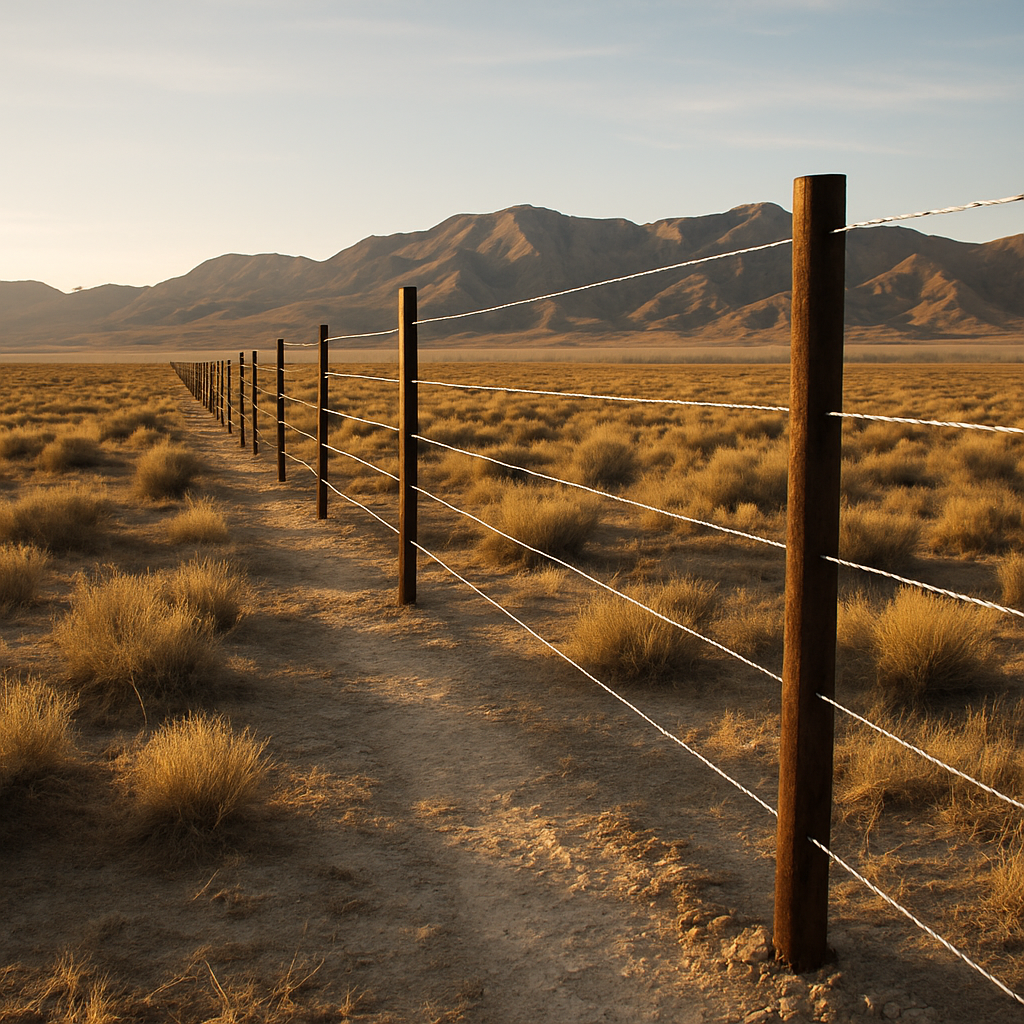
We fenced 1,400 feet of high-desert pasture for $1.11 a linear foot — and the contractors wanted almost four bucks. If you need to fence a high-desert pasture on a tight budget, the gap between those two numbers is real money, and everything I’m about to share is how we kept it on the low side out here in Indian Springs, Nevada.
The Mojave doesn’t do you any favors. Caliche hardpan sits about eight inches down in some spots, the wind doesn’t quit, and anything you leave on the ground overnight is either coyote-chewed or covered in blowing grit by morning. But over two seasons and a lot of trial and error, we got our perimeter and cross-fencing done for a fraction of what the quotes said, and the fence is still standing solid. Here’s how we did it on the place.
Know Your Ground Before You Fence a High-Desert Pasture
The single most expensive mistake you can make in the desert is buying materials before you know what you’re dealing with underfoot. We spent an afternoon walking the full perimeter with a 42-inch soil probe rod before we ordered anything. Mark every spot where you hit hardpan at less than 12 inches — those are your problem posts. In our setup, roughly 30% of the line hits caliche shallow enough that a standard T-post driver just bounces off. Knowing that upfront let us budget for a rented electric post driver on those sections rather than killing ourselves with a manual driver or hiring it out.
Also flag any washes or arroyos. The desert looks flat until a monsoon hits and suddenly you’ve got a river running through your pasture fence. We set those sections with extra-deep concrete footings on corner posts and run the bottom wire 6 inches higher through the wash so debris doesn’t blow out a whole panel.
Choose the Right Budget Fence Type for Your Livestock
Not all pasture fence needs to be the same. We run a mix of goats and a couple of beef crosses, so containment pressure varies a lot by section. Here’s roughly how we broke it down:
- Perimeter fence (goats, predator deterrent): 5-strand high-tensile smooth wire with one electrified strand at nose height. This is the most economical perimeter you can run for mixed livestock — no woven wire means no expensive rolls, and high-tensile goes up fast once you get the hang of the tensioner.
- Cross-fencing (cattle rotation): Temporary polywire on step-in posts. We can move a cross-fence in about 45 minutes. This kept our cross-fencing budget near zero compared to permanent wire.
- Sacrifice lot and catch pen: Galvanized cattle panels wired to T-posts. More expensive per foot but totally reusable — we’ve reconfigured the catch pen three times already.
Woven wire looks attractive but in the desert wind and with goats testing every inch of it, it sags and they exploit it. High-tensile with a hot wire is genuinely more goat-resistant in our experience, and it’s cheaper per foot when you buy wire in 4,000-foot rolls.
Sourcing Fencing Materials Without Getting Gouged

Rural Nevada has exactly two feed and fence stores within reasonable driving distance of Indian Springs, and neither one is cheap. We learned quickly to price everything three ways: local store, online direct, and local Craigslist/Facebook Marketplace for used panels. Here’s what actually saved us money:
- T-posts: Buy in bundles of 25 or more. The per-post price drops meaningfully and shipping consolidates. We use 6-foot steel T-posts on the perimeter with 8-foot spacing in straight runs, tightened to 6 feet on corners and in wash sections.
- Corner and brace posts: We use 6×6 treated wood posts at every corner, gate, and end. Don’t cut corners on corners — a blown corner post takes the whole run with it. Brace assemblies matter too. We run a horizontal brace rail and two diagonal wire braces on every corner.
- Used cattle panels: Check local Facebook groups weekly. Ranchers in the valley sell off panels when they’re reorganizing. We picked up 14 panels at $18 each versus $42 new. Most had surface rust but were structurally solid — wire brush and a coat of rust-inhibiting spray paint and they’re good for years.
Fencing Tools That Earn Their Keep in the Desert

You don’t need a lot of specialized tools to fence a pasture yourself, but the right few make a massive difference in a single day’s work. These are the ones that live in the truck bed all fencing season:
- A T-post driver sleeve — non-negotiable, don’t try to hammer T-posts with a maul
- A wire stretcher/come-along set — for getting high-tensile wire tight before you clip it off
- A good pair of fencing pliers — cuts, twists, staples, pulls staples, and doubles as a hammer
- A solar-powered fence energizer — we run a 1-joule unit on the perimeter hot wire and it’s kept the coyotes honest for two years without a single power bill charge
We also keep a fence repair kit in a five-gallon bucket near the gate: extra T-post clips, a spool of wire, and a cheap multimeter to troubleshoot the energizer. Nothing derails a fencing day like driving to town for a $3 clip.
Setting Posts in Caliche Hardpan: What Actually Works
This is where most desert fencing projects stall out. Caliche is basically natural concrete — it doesn’t give. Here’s our actual process for problem posts:
For T-posts hitting shallow caliche, we use a 1-inch masonry bit on a rotary hammer to core through the layer, then drive the T-post through the hole. It takes about four minutes per post versus 20 minutes of bouncing a driver off hardpan. For wood corner posts, we dig as deep as we can with a standard post-hole digger, hit the caliche layer with a breaker bar to fracture it, then pour a quick concrete collar. Not glamorous, but those corner posts have not moved in two Nevada summers, including through two serious wind events that topped 60 mph.
Pasture Gates: Don’t Cheap Out Here

We cheaped out on a gate once. The economy-grade gate started racking after one season and now it drags. Buy a decent gate the first time — the hardware-store specials are made of lighter gauge tube and they’ll punish you for it. We now use nothing smaller than a 4-gauge galvanized tube gate on every main entry, hung on properly set corner posts with heavy-duty gate hinges. It costs $40 more than the cheap version and lasts a decade longer.
Tracking Costs and Staying on Budget

Before we started our second fencing run, we finally got serious about tracking every dollar — materials, rentals, hardware, fuel to the store. That discipline changed how we plan projects on the whole homestead. We actually use our Homestead Weekly Planner from our Etsy shop to track fencing phases week by week, log what we spent, and note what to do differently next section. Having that written record meant we could look back and see exactly where we overspent on the first run — corner post materials and a second trip to town for stuff we forgot — and cut that waste from the second project entirely.
Real Cost Breakdown: Our High-Desert Fence Build
For transparency, here’s roughly what our main perimeter run cost — approximately 1,400 linear feet of 5-strand high-tensile with one hot wire, 12 corner/brace assemblies, two 16-foot gates, and all hardware:
- Wire (two 4,000-ft rolls high-tensile): ~$280
- T-posts (x175): ~$490
- Corner posts and lumber for braces: ~$310
- Concrete (bags): ~$55
- Gates (x2): ~$190
- Energizer and accessories: ~$140
- Miscellaneous hardware, clips, insulators: ~$90
- Total: ~$1,555 — or about $1.11/linear foot all-in, labor included because we did it ourselves
The lowest contractor quote we got was $3.80/linear foot for similar spec. Doing it ourselves saved us roughly $3,750 on that single run. It took us four weekends across two months, but those weekends also taught us more about this land than anything else we’ve done on the place.
8 Hard-Won Tips Before You Start Your Fence

- Start on a cool morning and plan to quit by noon in summer — caliche dust and 95-degree heat will end your day faster than you think
- Never set a corner post without checking it with a level in two directions
- Call 811 and mark your underground water and power lines before you drive a single post
- Build your gate openings 2 feet wider than you think you need — you’ll thank yourself the first time you pull through with a loaded trailer
- Walk the fence line every spring and fall — a loose wire or a leaning post caught early is a 10-minute fix; caught after a coyote incident it’s a full morning
- Keep all wire ends bent over and capped — an exposed wire end in a pasture is a vet bill waiting to happen
- Set your energizer ground rods in the deepest soil you have, not in caliche — poor grounding kills more electric fences than anything else out here
- Buy 10% more T-post clips than you calculate — you’ll bend, lose, and drop enough in the dirt to make up the difference
The high desert is hard on everything, fencing included. But a fence you built yourself, that you understand every inch of, is a fence you can fix at 6 a.m. before anyone else is awake. That kind of self-sufficiency is exactly why we’re out here. If you’re planning your own high-desert pasture fence run, drop your questions in the comments — we’re happy to share what we know from the place.
Want the actual system? Get the AI Morning Briefing Agent → https://sarimemorial.gumroad.com/l/enhkca
Leave a Reply